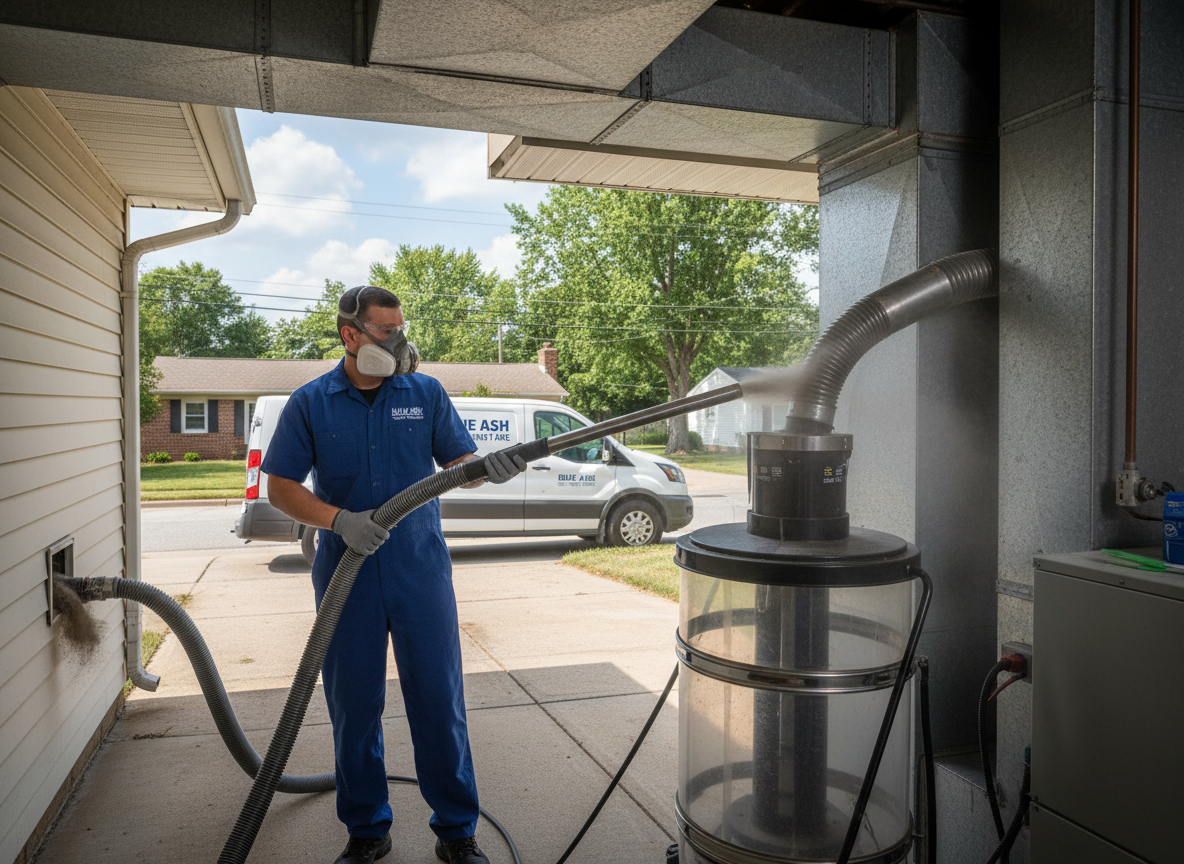
Blue Ash homes built from the 1950s onward often feature forced-air systems with duct runs that travel through crawlspaces and attics exposed to Ohio humidity swings. Over time, dust, pet dander, and construction debris collect along seams and turns, restricting airflow and forcing HVAC equipment to run longer cycles. Dryer vents in these same homes frequently terminate in sidewalls or soffits where lint traps moisture and creates blockages that raise fire risk. A proper cleaning requires accessing each branch rather than only the main trunk, followed by a negative-air vacuum to pull debris without redistributing it into living spaces.
Technicians at Swift Mend start by mapping the layout from the 9099 Plainfield Rd base, noting register locations and any flex duct sections common in ranch-style properties near the Blue Ash Recreation Center. They seal off the system, then use rotating brushes sized to each diameter to dislodge compacted material without damaging metal or fiberglass duct board. After mechanical cleaning, a HEPA-filtered vacuum captures loosened particles. Dryer vent work includes removing the lint screen housing, clearing the full run to the exterior termination, and verifying the flap operates freely so exhaust exits without back-pressure.
Edge cases appear regularly in Blue Ash where tree-lined streets drop leaves into exterior vent covers or where older homes have had additions that created long horizontal runs with inadequate slope. These conditions trap moisture and can lead to microbial growth if left unaddressed. Crews carry inspection cameras to document hidden turns and confirm clearance before closing access points. Homeowners receive a written summary of findings so they can see exactly which sections were cleaned and whether any flex sections should be replaced during future HVAC work.
Technician insight
In Blue Ash, the thing that catches most people out with air duct and dryer vent cleaning is the 1960s ranch homes near Plainfield Road where long horizontal dryer runs sit in unconditioned crawlspaces. Seasonal humidity condenses on the lint-coated metal, creating hidden corrosion that only shows up once the vent is opened.
Dryer Vent Restriction in Blue Ash Ranch
A homeowner near the Blue Ash Nature Preserve reported clothes taking multiple cycles to dry. Inspection showed a 14-foot horizontal dryer run with heavy lint buildup and a partially blocked exterior flap. The crew cleared the line, replaced the damaged flap, and restored full exhaust flow without disturbing the surrounding landscaping.
How it works
- 1
System Mapping
Locate all registers, returns, and the dryer termination point while noting duct material and any visible damage.
- 2
Isolation and Containment
Seal off the HVAC system and living areas to prevent dust migration during cleaning.
- 3
Mechanical Agitation
Run rotating brushes through each duct run and the dryer vent line to break up compacted debris and lint.
- 4
Negative-Air Extraction
Use HEPA-filtered vacuum equipment to pull loosened material out of the system and away from the home.
- 5
Final Inspection and Report
Check airflow at registers, photograph the dryer vent termination, and provide a written summary of work completed.
Pricing
Upfront quotes after on-site inspection; cost depends on number of runs, duct material, and accessibility in Blue Ash homes.