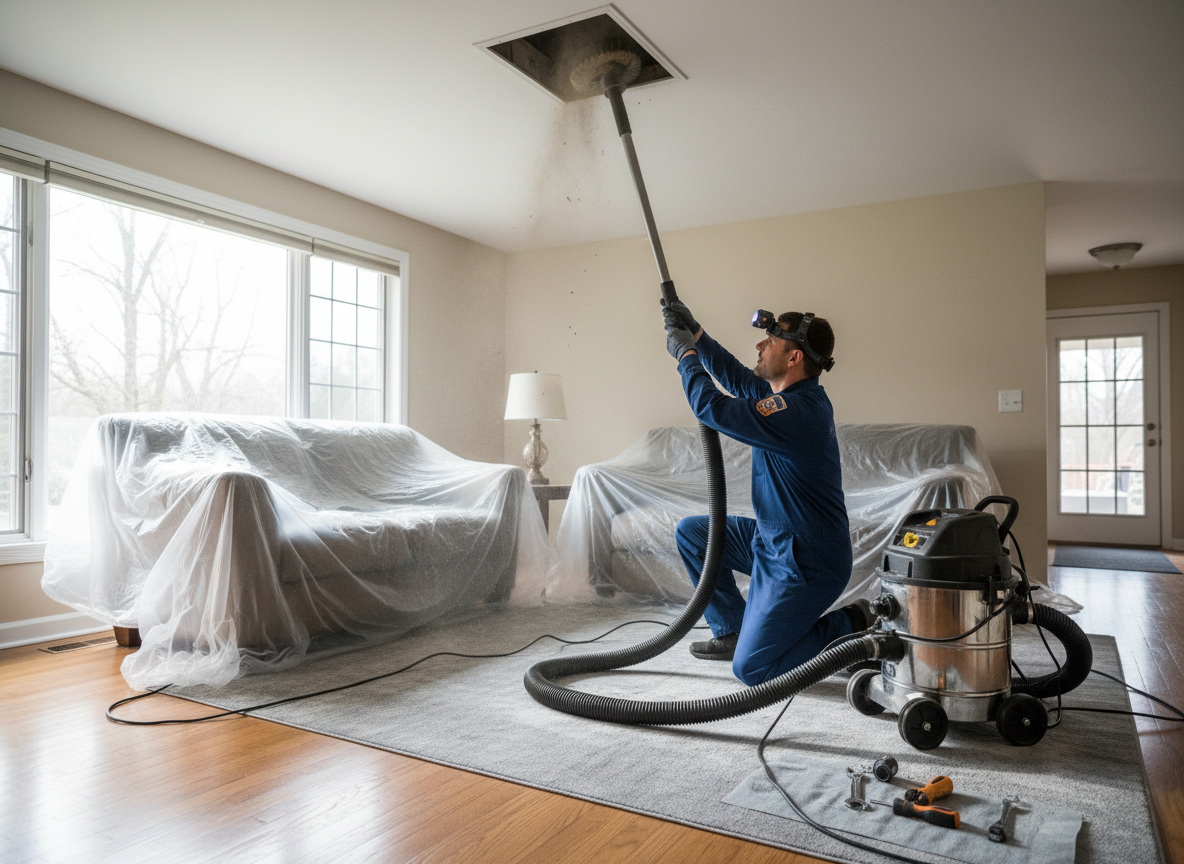
Blue Ash homes built from the 1950s through the 1980s often have original galvanized duct runs that collect construction dust, insulation fibers, and seasonal pollen. These systems run through attics and crawl spaces where temperature swings cause condensation and allow mold to take hold on interior surfaces. Cleaning requires accessing each branch run without damaging the thin metal seams common in that era of construction.
Forced-air furnaces in Hamilton County homes pull air from multiple returns that can pull in pet dander and road dust from nearby I-71. Technicians must map every supply and return before starting so no section is missed, especially in split-level layouts common along Plainfield Road. Skipping a single trunk line leaves visible residue on registers after the first heating cycle.
Edge cases include homes with flex duct added during renovations; the inner liner tears easily and must be inspected before agitation. Older sheet-metal joints can separate if negative pressure is applied too aggressively, so experienced crews use controlled vacuum only after sealing registers and testing static pressure first.
Technician insight
In Blue Ash, the thing that catches most people out with Residential Air Duct Cleaning is the number of mid-century homes where the original ductwork runs through finished ceilings with almost no access panels; once you start pulling registers you often find the main trunk is blocked by a later drywall patch that has to be cut open before the job can finish.
Blocked Return in a 1968 Ranch
Homeowner reported weak airflow from the main return near the furnace. Inspection showed a collapsed section of original duct where a bathroom renovation had added weight above the ceiling. The crew opened one access point, replaced the damaged run with rigid metal, and completed the cleaning in the same visit so the system pulled correctly again.
How it works
- 1
Initial System Inspection
Map all supply and return runs, note access points, and check for damaged flex or separated joints before any equipment is attached.
- 2
Register and Vent Sealing
Cover every register and return with magnetic seals to create proper negative pressure throughout the entire duct network.
- 3
Agitation and Vacuum Extraction
Use rotating brushes and compressed air whips on each branch while the vacuum removes loosened debris to the exterior.
- 4
Final Walk-Through and Register Reset
Remove seals, reinstall registers, and run the system to confirm airflow and verify no visible dust remains on surfaces.
Pricing
Cost depends on number of runs, access difficulty, and whether flex duct sections need replacement.