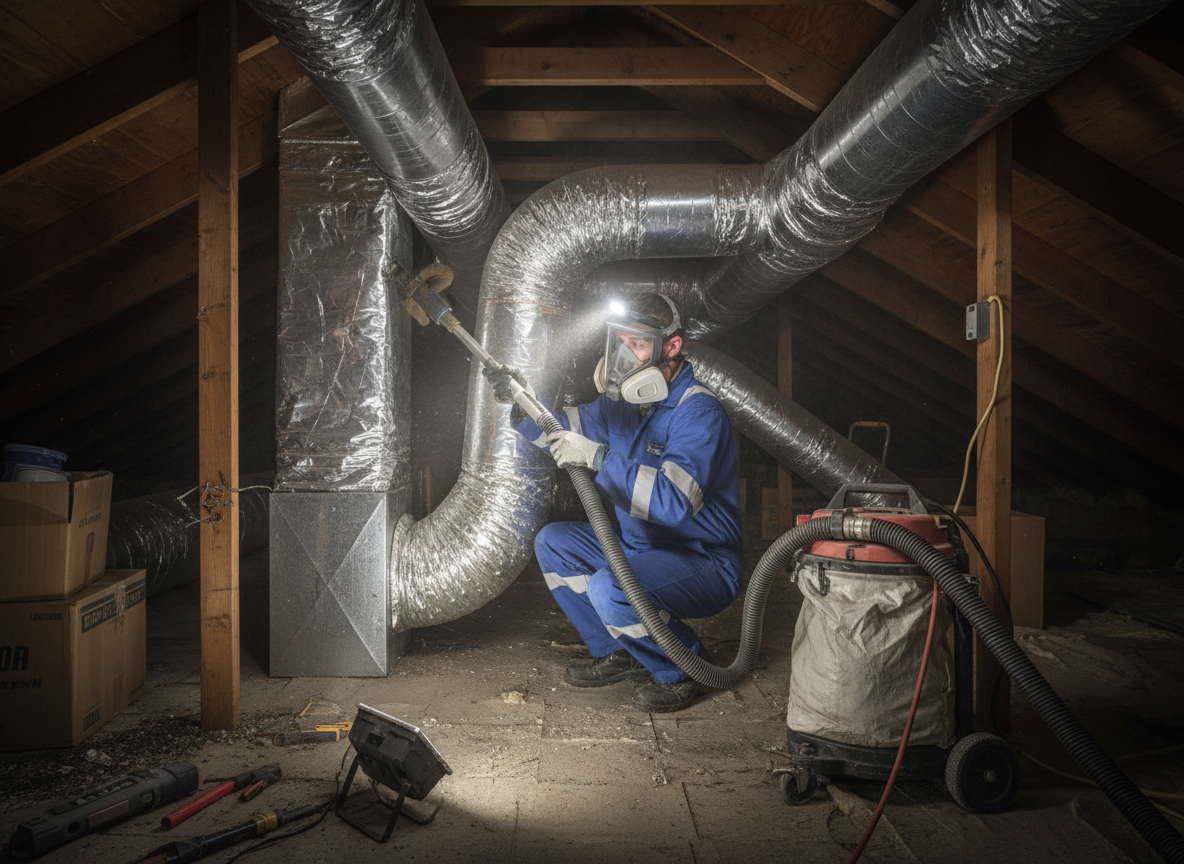
Attic duct cleaning in Blue Ash homes often involves older flexible ductwork installed in the 1970s and 1980s that sags between joists and collects heavy layers of insulation fibers mixed with Ohio pollen. Technicians must navigate low-clearance attics where blown-in cellulose can shift and block access, requiring careful vacuuming without disturbing vapor barriers or electrical runs. Homes near Plainfield Road and surrounding streets frequently show signs of rodent activity in ducts due to nearby wooded lots, which introduces additional debris that standard filters miss.
Seasonal humidity swings in the Blue Ash area cause condensation inside metal trunk lines during summer, leading to mold growth that releases spores into living spaces below. Cleaning requires sealing off registers first, then using negative-air machines to pull particles out without pushing them into bedrooms or the kitchen. Crews check for disconnected sections common in split-level homes around the area, where poor support lets ducts pull apart over time.
Access points in Blue Ash attics are often limited to small scuttle holes near the HVAC unit, making full inspection of every branch line essential before starting. Technicians use cameras to locate blockages from construction dust left during roof replacements, which is frequent on streets with 40-year-old homes. Proper cleaning restores airflow without introducing new contaminants from the attic environment.
Technician insight
In Blue Ash, the thing that catches most people out with attic duct cleaning is how the 1970s split-level homes around Montgomery Road have ducts that run through unconditioned spaces where summer heat makes the flex line brittle and prone to tearing during cleaning if you pull too hard.
Sagging Ducts in Blue Ash Attic
Homeowner noticed weak airflow from ceiling vents during summer. We found multiple sagging flex lines full of cellulose and pollen in the low attic. After sealing registers and using negative air, we re-supported the ducts and extracted the debris without disturbing the insulation layer. Airflow returned to normal across the main floor.
How it works
- 1
Initial Assessment
Technician inspects attic access and duct layout from the 9099 Plainfield Rd base before beginning work.
- 2
Sealing and Containment
Registers are sealed and negative pressure is established to keep debris contained during cleaning.
- 3
Vacuum and Agitation
Flexible whips and brushes loosen buildup while HEPA vacuums extract material from trunk and branch lines.
- 4
Final Inspection
Camera check confirms clean ducts and identifies any disconnected sections before restoring airflow.
Pricing
Cost depends on attic accessibility, duct length, and amount of buildup; upfront quotes provided after inspection.