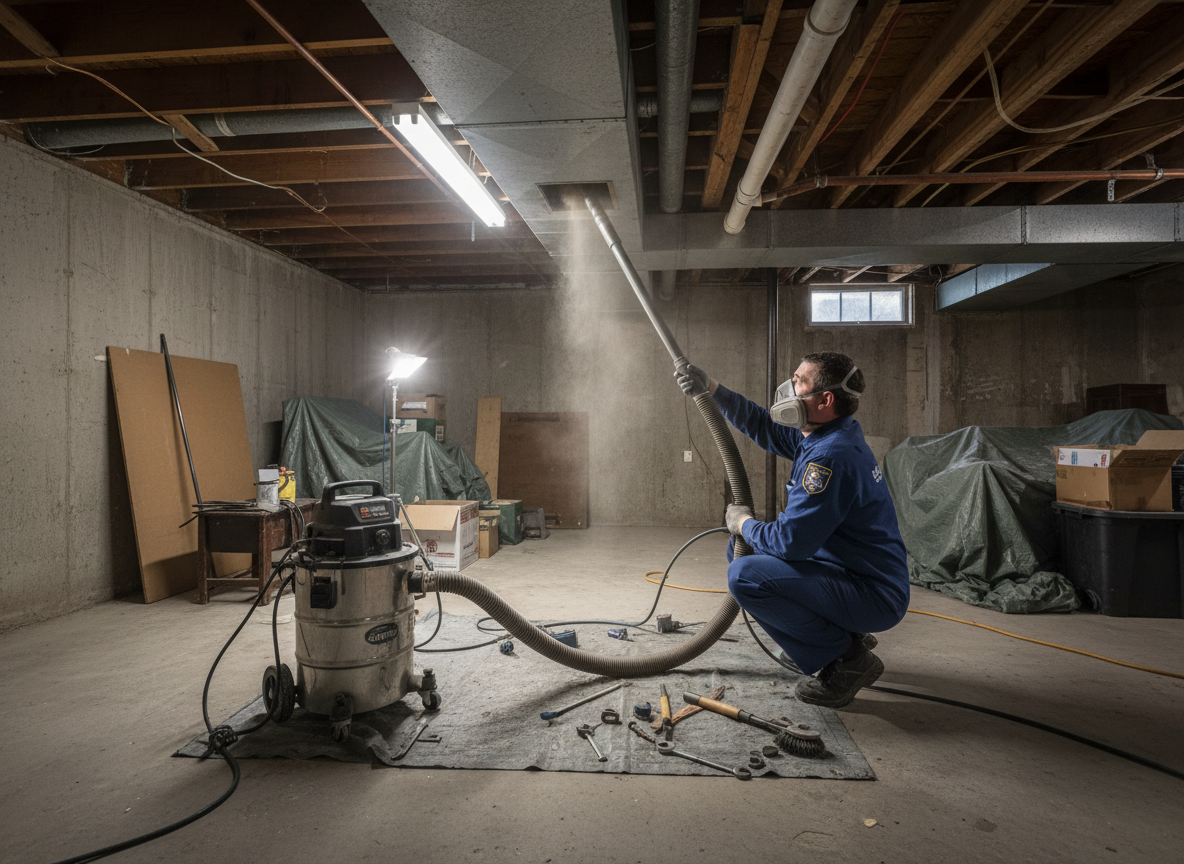
Blue Ash homes built from the 1950s through the 1980s often feature finished basements with ductwork running through concrete block walls and low-clearance ceilings. These runs collect fine dust from the area's freeze-thaw cycles and high summer humidity that seeps in through foundation cracks. Cleaning requires removing registers, sealing the system, and using negative-air machines sized for the typical 1,800- to 2,400-square-foot ranch or split-level layouts common along Plainfield Road and surrounding streets in Hamilton County.
Technicians must watch for flexible duct sections that have sagged or been crushed behind drywall additions, a frequent find in neighborhoods near the Blue Ash Nature Preserve. Moisture from occasional Ohio River flooding can leave mineral deposits inside metal trunks, so brushes alone won't clear them. Proper service includes vacuuming each branch line to the main trunk, inspecting for disconnected joints, and confirming airflow after reassembly to prevent the musty smell that returns quickly in humid basements.
Access points in many Blue Ash basements are limited because homeowners finished the space without leaving clean-out panels. This forces entry through return grilles or by cutting temporary openings that must be patched afterward. The work also accounts for the proximity of laundry rooms and water heaters, where lint and combustion byproducts mix with general household dust in the same duct runs.
Seasonal Considerations
Spring pollen and fall leaf debris increase load on basement returns in Blue Ash homes. Winter heating pushes warm air through cooler basement ducts, creating condensation that binds dust into harder layers requiring longer agitation times.
Technician insight
In Blue Ash, the thing that catches most people out with basement air duct cleaning is finished ceilings that hide sagging flex duct installed when the basement was remodeled in the 1990s. Those low spots trap moisture from summer humidity and turn into mold colonies that standard brushes miss unless you cut inspection openings.
Sagging Flex Duct Behind Drywall
A homeowner in a 1970s split-level near Plainfield Road noticed musty air from the basement returns every spring. Inspection revealed crushed flexible duct sections hidden above a drop ceiling that had collected standing condensation. We opened two access points, replaced the damaged runs, and completed full negative-air cleaning of the remaining metal trunks. Airflow improved and the odor did not return the following season.
How it works
- 1
Initial Assessment
Inspect all accessible registers, trunks, and returns in the basement to map the layout and note any crushed or disconnected sections.
- 2
System Isolation
Seal off the HVAC unit and block supply and return paths to prevent dust migration into living areas during cleaning.
- 3
Agitation and Extraction
Use rotating brushes and compressed air to loosen debris while a negative-air machine pulls material out through the main trunk.
- 4
Final Verification
Reassemble components, check airflow at each register, and confirm no visible dust remains in the cleaned sections.
Pricing
Cost depends on total linear feet of basement duct, number of finished rooms, and whether temporary access cuts are required.