In Blue Ash homes built from the 1960s through the 1990s, evaporator coils often sit in tight attic or basement spaces where dust from nearby Sharonville industrial corridors and pollen from Montgomery green spaces collects quickly. When winter temperatures drop and furnaces run continuously, that layer hardens and blocks airflow, forcing the blower motor to work harder. A proper coil cleaning uses no-rinse alkaline solutions on the evaporator side and foaming cleaners on the condenser, followed by a low-pressure rinse to avoid bending fins. Skipping the rinse step leaves residue that attracts more dirt within weeks.
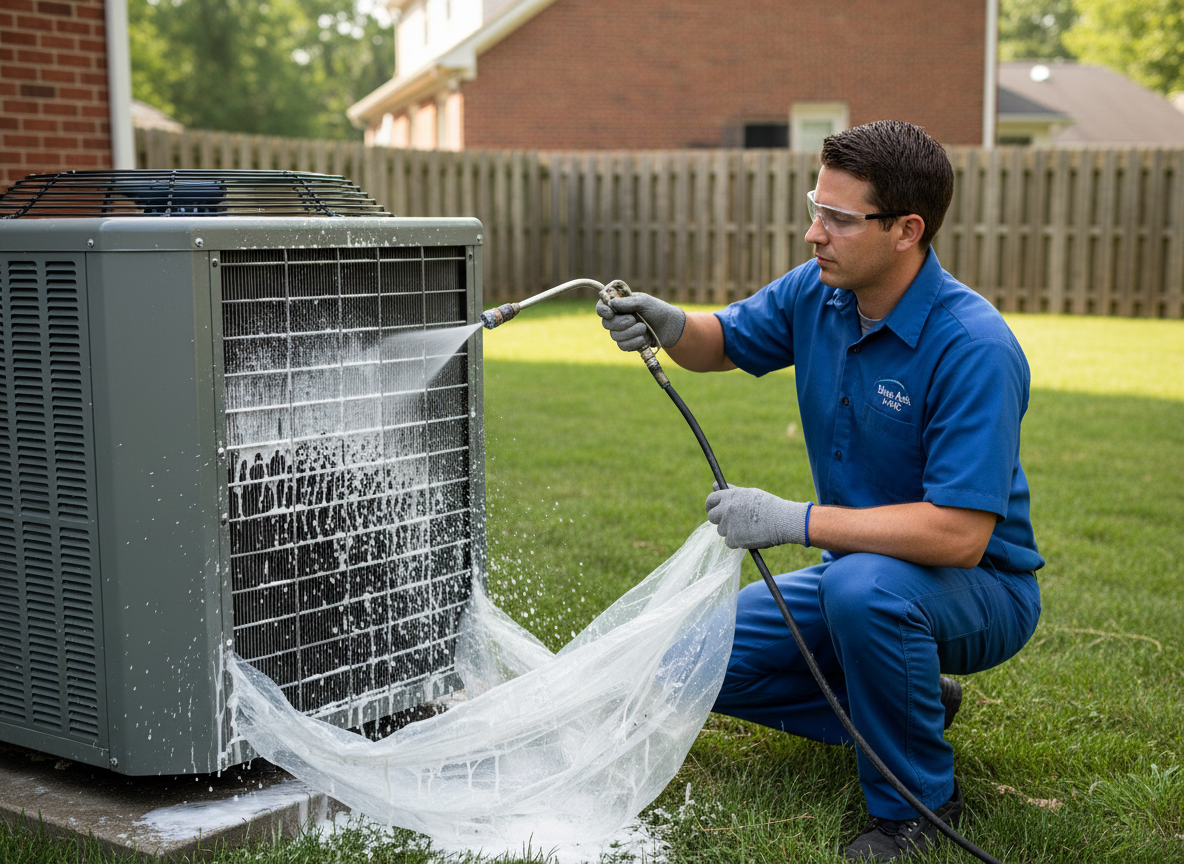
Condenser coils on split systems in Blue Ash yards face additional challenges from oak pollen and lawn clippings that pack between fins during humid summers. Restricted heat transfer raises head pressure and shortens compressor life. Technicians isolate power, brush loose debris, apply a biodegradable degreaser, then straighten fins with a comb before restoring operation. Homeowners who attempt pressure washing from the wrong angle commonly bend fins and create permanent airflow restrictions that require coil replacement later.
Regular coil cleaning also prevents moisture from lingering on the evaporator, which reduces the chance of mold growth that circulates through the ductwork common in ranch-style homes along Plainfield Road. After cleaning, static pressure readings are taken on both sides of the coil to confirm restored performance. Systems that show persistent high pressure may need a follow-up inspection of the condensate drain or blower wheel.
Technician insight
In Blue Ash the thing that catches most people out with coil cleaning hvac is the tight access on 1970s and 1980s split systems tucked into low attics along Hunt Road. Homeowners often think a quick spray is enough, but without removing the access panel and actually reaching the back side of the evaporator you leave the heaviest buildup untouched and the static pressure never drops.
Restricted Airflow in a Blue Ash Ranch
A homeowner on Plainfield Road noticed weak airflow from every vent even though the filter was new. Inspection showed the evaporator coil coated with a hard layer of dust and pollen that had built up over two seasons. After isolating power and applying the proper no-rinse cleaner followed by a controlled rinse, static pressure dropped to normal levels and the temperature split returned to the expected range.
How it works
- 1
System Inspection
Technicians arrive at the Blue Ash address, shut down power, and document pre-service static pressure and temperature split across the coil.
- 2
Coil Access and Protection
Panels are removed, surrounding surfaces are masked, and the condensate drain is checked for blockages before any cleaning begins.
- 3
Cleaning Application
Evaporator receives no-rinse solution; condenser receives foaming degreaser. Both are allowed proper dwell time then rinsed at controlled pressure.
- 4
Fin Straightening and Reassembly
Fins are combed, panels reinstalled, power restored, and post-service pressures recorded to verify improvement.
Pricing
Cost depends on system accessibility, coil condition, and whether both indoor and outdoor coils require service; most Blue Ash residential jobs fall in a moderate range.