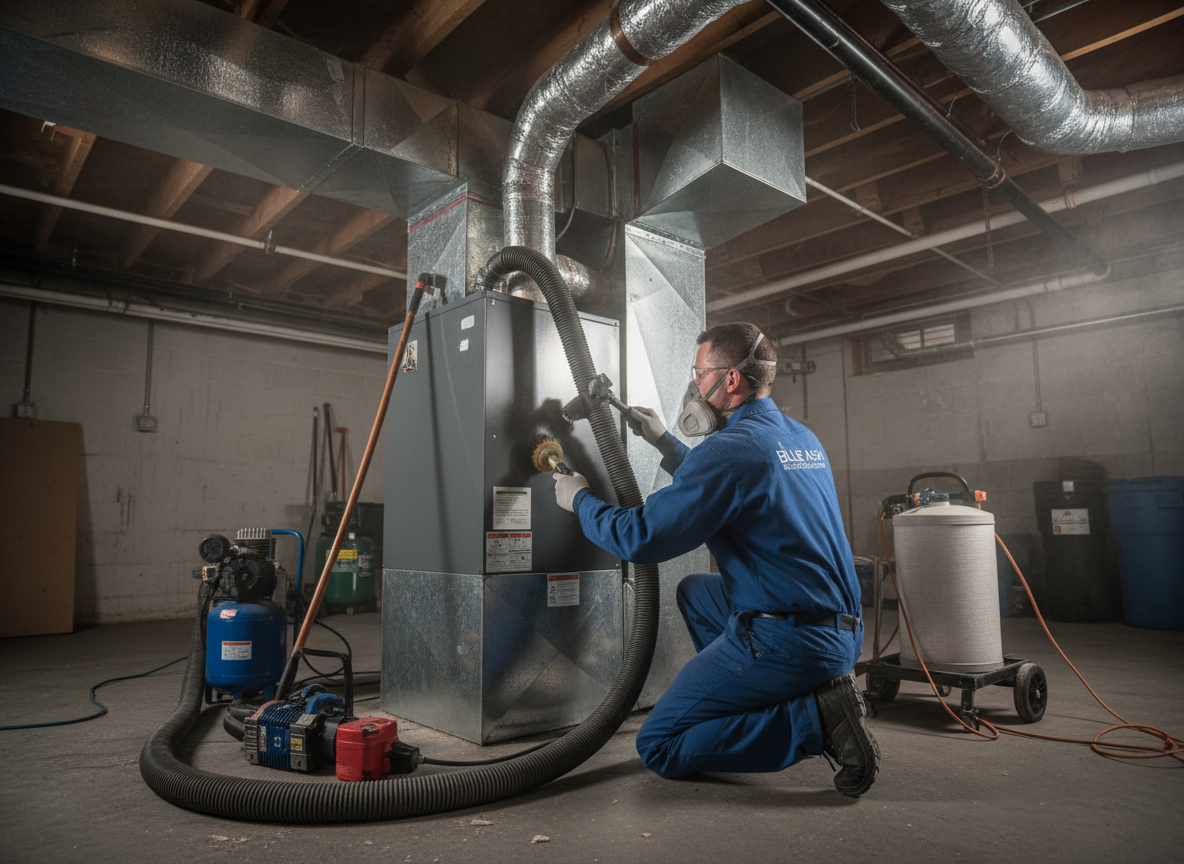
Blue Ash homes often feature ductwork installed decades ago that runs through unconditioned attics and crawl spaces. Seasonal temperature swings pull dust and insulation fibers into the system, and furnace filters alone cannot catch everything that settles on the blower and heat exchanger. Cleaning the full path prevents restricted airflow that forces the furnace to run longer cycles during cold snaps.
We start at the furnace in the basement or utility closet and work outward through each supply and return run. In Blue Ash neighborhoods like the area around Plainfield Road, many homes have flex duct sections that trap debris at every bend. Removing that material restores even pressure without replacing the original trunk lines.
After the mechanical cleaning, we vacuum the furnace cabinet and inspect the blower wheel for imbalance. Residue left on the wheel can throw off motor bearings over time, especially when the system cycles daily from November through March. Homeowners notice quieter operation and steadier temperatures once the restriction is gone.
We also check the condensate drain on high-efficiency units common in newer Blue Ash builds. Clogged drains from dust mixing with moisture create overflow risks that stain ceilings below. Addressing both the ducts and the furnace interior in one visit prevents callbacks during the next heating season.
Technician insight
In Blue Ash, the thing that catches most people out with furnace and duct cleaning is the original flex duct runs from the 1970s and 80s homes around Plainfield Road. Those sections collapse or tear when you push a brush through, so you have to work slower and sometimes access from multiple points instead of one central vacuum setup.
Restricted airflow after attic insulation update
A Blue Ash homeowner noticed weak heat on the second floor after adding insulation. We found the return duct in the attic coated with blown-in cellulose that had sifted through seams. We isolated the furnace, agitated and extracted the material from every branch, then resealed the accessible joints. The system regained full airflow and the furnace stopped short-cycling.
How it works
- 1
System Inspection
We examine the furnace, blower, and accessible duct runs to identify buildup locations and any damaged sections before starting.
- 2
Mechanical Agitation
Rotary brushes and compressed air dislodge debris from duct walls while the furnace is isolated.
- 3
Negative-Air Extraction
A HEPA vacuum pulls loosened material out of the system and prevents it from entering living spaces.
- 4
Furnace Component Cleaning
The blower wheel, heat exchanger surfaces, and cabinet are vacuumed and wiped to restore airflow.
- 5
Final Verification
We run the system and confirm balanced airflow at multiple registers before leaving the property.
Pricing
Pricing is quoted after inspection because duct length, number of turns, and furnace condition vary by Blue Ash home.